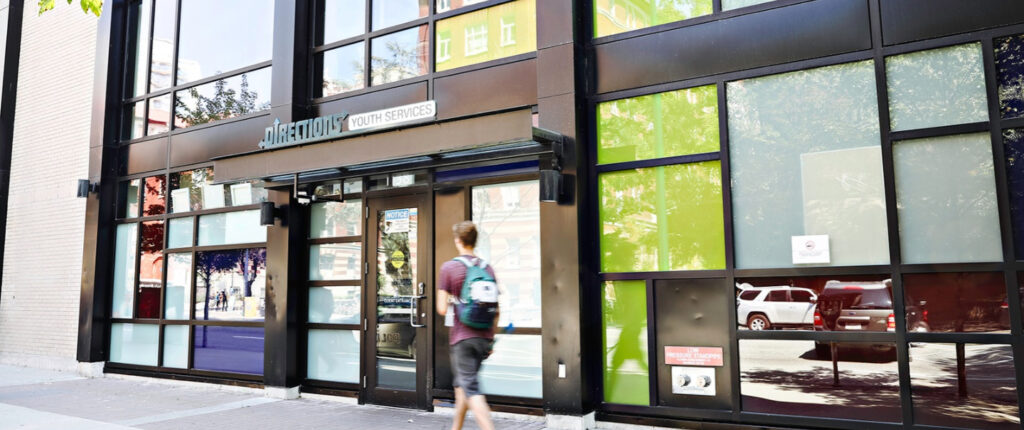
For many homeless and precariously housed youth, hunger is a daily struggle. And even when someone has enough money to go to the store, there are other barriers for this demographic that may not be obvious.
When Food Costs More Than Money
Something we’ve probably all experienced is seeing someone at the grocery store or other food seller being followed around or have a closer eye kept on them. Something we haven’t all experienced (though certainly some readers have) is being the person followed or treated with suspicion when we’ve gone somewhere to buy food. In issues of The Slice (a zine created by youth at Directions), this is a theme that appears again and again in youth’s art.
Being monitored this way is just one of the barriers unhoused youth might face when trying to get food. Being treated with indignity is too common of an experience for unhoused youth. And it’s an experience we don’t want to replicate in our programs. Instead, we meet youth with dignity.
Opening Doors with Food
One of the most important things we do at Directions, and across FSGV programming, is center dignity in how we interact with clients and provide services. While food security is not our only focus, being hungry is an urgent need that must be met. It’s why the Drop-In Centre runs a Food and Pantry Program. It’s why we partner with other local organizations to keep it running. What we offer through these programs is more than just a hot meal, but that hot meal is a necessity in building enough stability to think about what’s next.
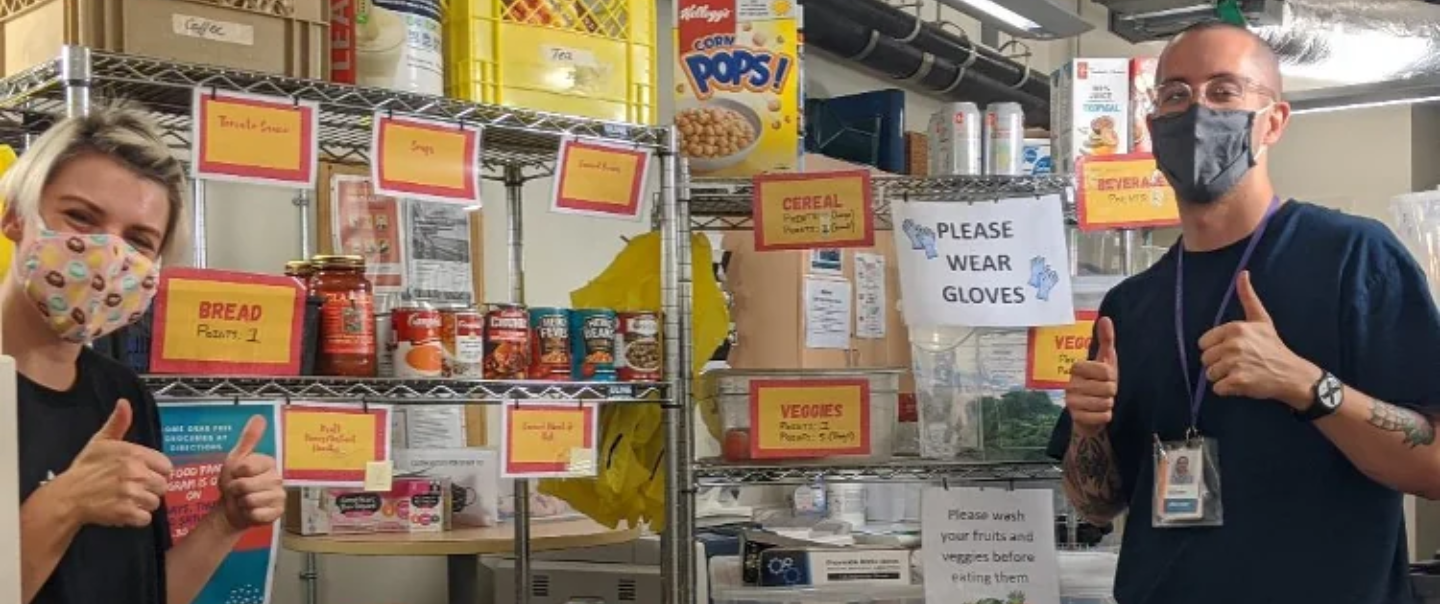
The Food Program at Directions runs every single day of the year. It’s a low-barrier program open to youth ages 13 to 24 who are unhoused or who don’t have stable housing (like couch surfing). We serve hot dinners every evening and a breakfast each morning. There are snacks and drinks 24/7 for youth who come in hungry in between meals. Alongside the Food Program is the Pantry Program, like a mini grocery store that uses a points system for shopping. Every Tuesday, Thursday, and Saturday clients can come when the pantry is open and pick up food items (like fruits and veggies, packaged foods, and granola bars) to take with them.
We’ve written before about the Food Program being an entry point program. When youth are at the Centre for breakfast, snacks, or hot dinners, staff are available to connect with them: asking about their day, checking in, and starting real conversations. In short: we treat the youth as people. The youth visiting Directions are just as multi-faceted as the rest of this and honouring this truth is how we build a foundation of trust.
Trust and Dignity While Meeting Needs
The Pantry Program’s point system offers youth the opportunity to make decisions about how they spend their points: choosing what to prioritize and how they’d like to nourish themselves. Their choices are met without judgement and with warmth and care. They have the dignity of being trusted to make their own decisions. Trauma-informed, client-led care is what Directions (and all FSGV) programs are rooted in. Trauma-informed support means recognizing the ways that trauma can impact every aspect of someone’s life and staying firm in respecting their autonomy and choice—even what food they’d like to eat.
The Pantry and Food Programs give youth access to support and relief for the immediate need for food, while fostering the relationships and safety to pursue more long-term goals. When youth access these programs, we aren’t pushing long-term goals on them. We’re opening the door, providing stability, and building trust.
Meeting someone with dignity doesn’t look like following them around or criticizing their choices. It looks like asking “how was your day?” and meaning it. Meeting someone with dignity means honouring their autonomy and choice, even the small ones like how they nourish themselves. Meeting youth with dignity is how we truly provide support.
Winter can be a particularly difficult time for youth who are struggling. It’s cold, especially without somewhere warm and safe to sleep. Many unhoused youth don’t have the tools and resources they need and are just doing what they can to survive.
At FSGV, we’re doing what we can to ehlp them thrive. This means taking a wrap-around, big picture approach to providing support—every day of the year. Now is the perfect time to join in and support the work we’re doing with youth in your community. Today through December 31st all donations are being matched, dollar-for-dollar, up to $125,000.